Elizabeth Bishop – Postcards & Miracles: A deeper look at her life and poems to master your poetic voice. A mini-retreat with Jules Nyquist. March 6-7, 2026

$125.00

Mini-retreat two days:

Friday, March 7th - 1 to 4 pm

Saturday, March 8th - 10 am - 4 pm (includes writing lunch break)

In this mini-retreat, we’ll explore the writing and life of Elizabeth Bishop. There are two parts to allow ample time to get to know this Pultzer-Prize winning poet’s life story through her poetry. By reading and discussing her poems and what was written about her, we will generate our own poems to reflect on some of the same issues that speak to us, and study her craft. Jules studied with Bishop scholar April Bernard at Bennington College.  

Part 1 – Postcards

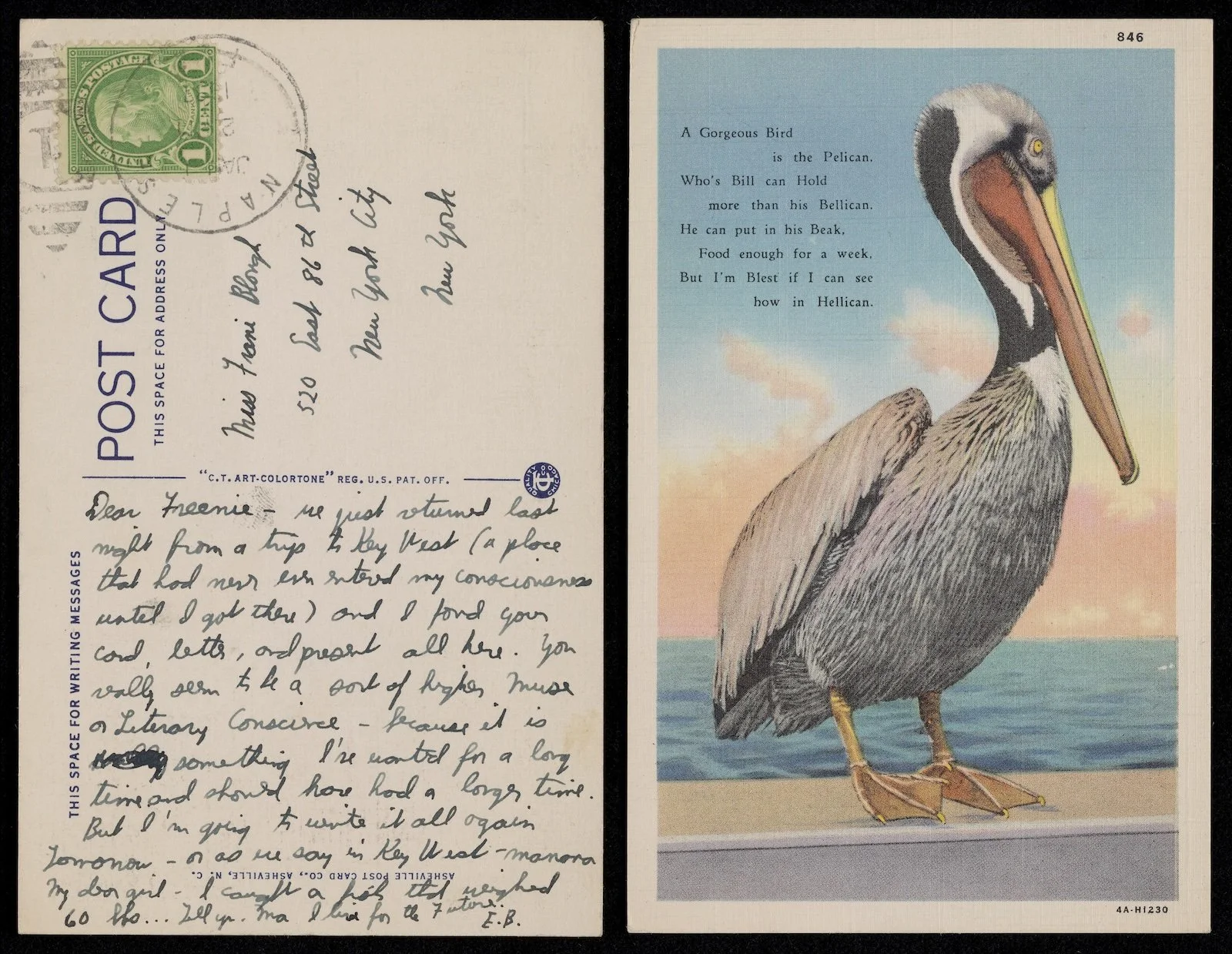
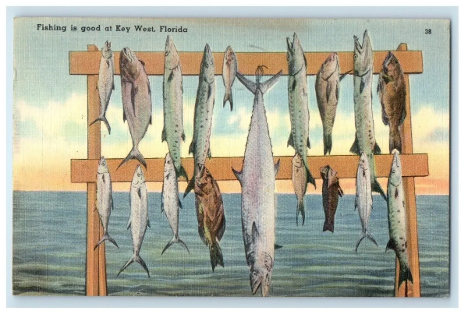
For the first part of this workshop, we’ll explore in our imaginations and through her poetry and postcards, where Elizabeth traveled:  Nova Scotia, Key West, Brazil, and Boston. Each geographic area will use a Bishop poem for a writing prompt. We’ll have time for a writing exercise after reading and discussing a poem in each of these four areas (four writing prompts, with time to share your generative work).

Elizabeth Bishop delightedin the postcard. It suited her poetic subject mater and her way of life, this poet of travel who was more often on the move than at home. She writes: “wherever that may be,” as she put in her poem Questions of Travel. Bishop told James Merrill in a postcard written in 1979 that she seldom wrote “anything of any value at the desk or in the room where I was supposed to be doing it— it’s always in someone else’s house, or in a bar, or standing up in the kitchen in the middle of the night.” (Langdon Hammer, Paris Review, Nov 27, 2023)

Part 2 – Miracles

How can we, as poets, reflect on Bishop’s writing style and how she found her voice, to write with our own poetic voice? For this part of the workshop, we will survey the life of Elizabeth Bishop from her struggles to her determination that made her who she was as a poet. We will study her poems and reflect on our own writing to incorporate our personal experiences into our encounters with the world.

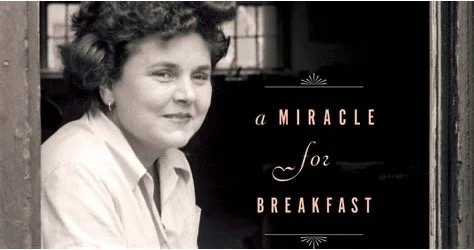
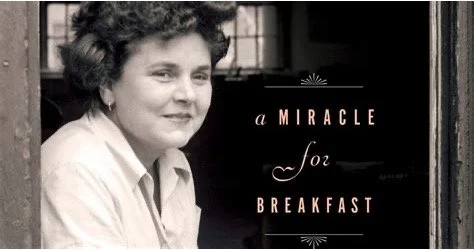
Jules’ favorite Elizabeth Bishop biography is A Miracle for Breakfast by Megan Marshall. Elizabeth Bishop was a master of the sestina, of the same name. We will review this poem as background into Elizabeth’s struggles with poetry after college (she almost quit the writing life), the importance of a writing mentor. We will review her poems and writings that incorporate her early life, struggles with her father’s death and mother’s mental illness, her life with her lover Lota de Macedo in Brazil, Louise Crane in Cape Cod, her mentor Marianne Moore, and her mentorship and friendship with Robert Lowell. 

Class time will be allotted for writing in response to Bishop’s poems and the study of her poetic craft.

Discussion and reading Bishop poems: 50% - generative writing 30% - discussion of student writing in class 20% aprx or as time allows.

Limit 10 students to allow time for writing and discussion of student work.

Mini-retreat two days:

Friday, March 7th - 1 to 4 pm

Saturday, March 8th - 10 am - 4 pm (includes writing lunch break)

In this mini-retreat, we’ll explore the writing and life of Elizabeth Bishop. There are two parts to allow ample time to get to know this Pultzer-Prize winning poet’s life story through her poetry. By reading and discussing her poems and what was written about her, we will generate our own poems to reflect on some of the same issues that speak to us, and study her craft. Jules studied with Bishop scholar April Bernard at Bennington College.  

Part 1 – Postcards

For the first part of this workshop, we’ll explore in our imaginations and through her poetry and postcards, where Elizabeth traveled:  Nova Scotia, Key West, Brazil, and Boston. Each geographic area will use a Bishop poem for a writing prompt. We’ll have time for a writing exercise after reading and discussing a poem in each of these four areas (four writing prompts, with time to share your generative work).

Elizabeth Bishop delightedin the postcard. It suited her poetic subject mater and her way of life, this poet of travel who was more often on the move than at home. She writes: “wherever that may be,” as she put in her poem Questions of Travel. Bishop told James Merrill in a postcard written in 1979 that she seldom wrote “anything of any value at the desk or in the room where I was supposed to be doing it— it’s always in someone else’s house, or in a bar, or standing up in the kitchen in the middle of the night.” (Langdon Hammer, Paris Review, Nov 27, 2023)

Part 2 – Miracles

How can we, as poets, reflect on Bishop’s writing style and how she found her voice, to write with our own poetic voice? For this part of the workshop, we will survey the life of Elizabeth Bishop from her struggles to her determination that made her who she was as a poet. We will study her poems and reflect on our own writing to incorporate our personal experiences into our encounters with the world.

Jules’ favorite Elizabeth Bishop biography is A Miracle for Breakfast by Megan Marshall. Elizabeth Bishop was a master of the sestina, of the same name. We will review this poem as background into Elizabeth’s struggles with poetry after college (she almost quit the writing life), the importance of a writing mentor. We will review her poems and writings that incorporate her early life, struggles with her father’s death and mother’s mental illness, her life with her lover Lota de Macedo in Brazil, Louise Crane in Cape Cod, her mentor Marianne Moore, and her mentorship and friendship with Robert Lowell. 

Class time will be allotted for writing in response to Bishop’s poems and the study of her poetic craft.

Discussion and reading Bishop poems: 50% - generative writing 30% - discussion of student writing in class 20% aprx or as time allows.

Limit 10 students to allow time for writing and discussion of student work.


Elizabeth Bishop (February 8, 1911 – October 6, 1979) was an American poet, short-story writer, and recipient of the 1976 Neustadt International Prize for Literature. She was the Poet Laureate of the United States from 1949 to 1950, the Pulitzer Prize winner for Poetry in 1956 and the National Book Award winner in 1970.  https://www.poeticous.com/elizabeth-bishop

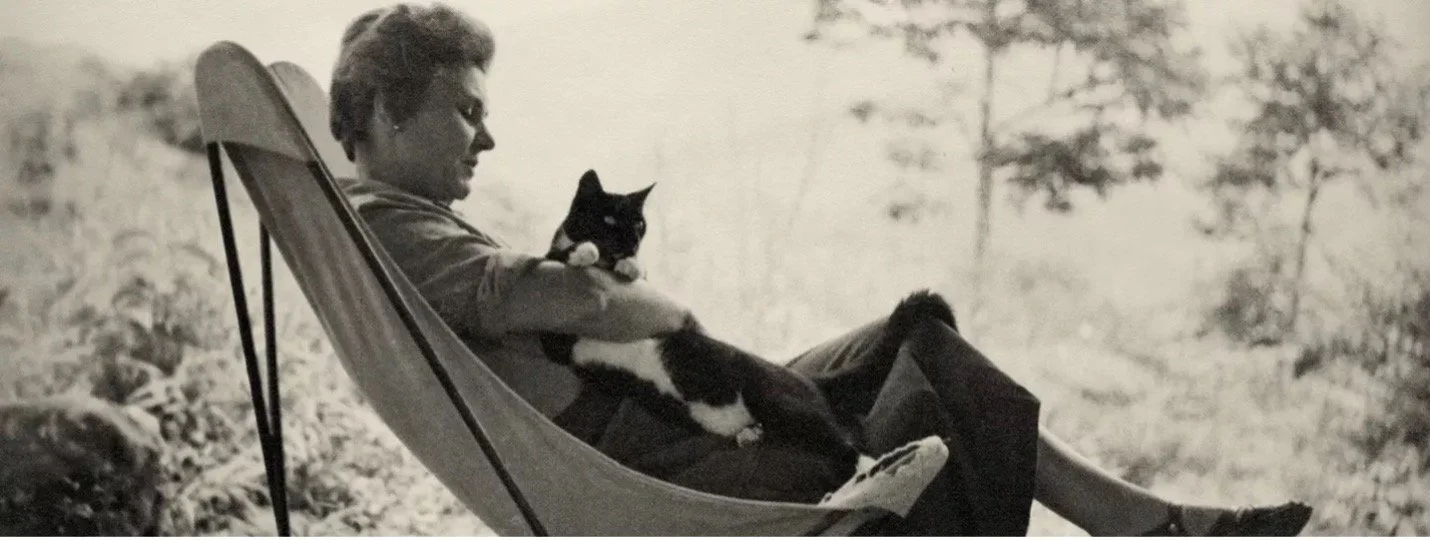
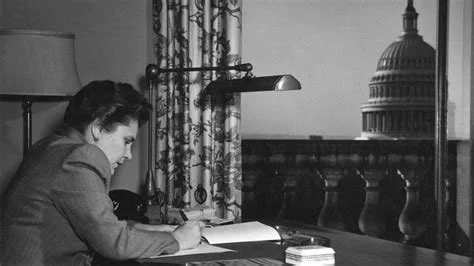
Photo: 1954 in Samambaia Brazil with cat Tobiasp


Jules Nyquist, Ph.D., is the founder of Jules’ Poetry Playhouse in Placitas, NM. Her recent award-winning books are Atomic Paradise, Homesick, then, and The Sestina Playbook (Poetry Playhouse Publications). She took her PhD in Post-Secondary Adult Education from Capella University and her MFA in Writing and Literature from Bennington College.  Her philosophy of creative writing and her dissertation research focus on poetic inquiry is that poetry uses qualities of observation, curiosity, emotion, and imagination, to name a few. These qualities can serve as a lens for viewing the world. She supports writers to use their senses, breath, language, and their voice to create ways to share their stories.  Jules believes it is important to feel that our voices are being heard and to have that we have a sense of community with other writers and poets.  Jules studied with Bishop scholar April Bernard at Bennington College.


Jules’ poems have appeared in Notes of Light and Dark: Southwestern Aubades and Nocturnes anthology, Taos Journal of Poetry, Open-Hearted Horizon: An Albuquerque Poetry Anthology, IKON Magazine, Journal of Humanistic Mathematics, Oddball Magazine, Bombfire, and elsewhere. Jules has presented or had poems featured at the NM History Conference, the American Psychological Association Conference in Denver, the Jonquil Motel in Bisbee, AZ, the Rattlesnake Museum in Albuquerque, NM, a kind of a small array gallery in Magdalena, NM, the Briar in Minneapolis, MN, the Black Dog Café in St. Paul, MN, a Masonic Lodge in Bemidji, MN, the New Mexico Humanities Council, and featured at the International Women’s Day at the Santa Fe Capitol Rotunda, and many other bookstores, bars, galleries, and elsewhere. She taught poetry for the NM State Poetry Society and UNM Writers’ Conference and continues teaching at Jules’ Poetry Playhouse.

Class limit 10 students. All handouts provided.

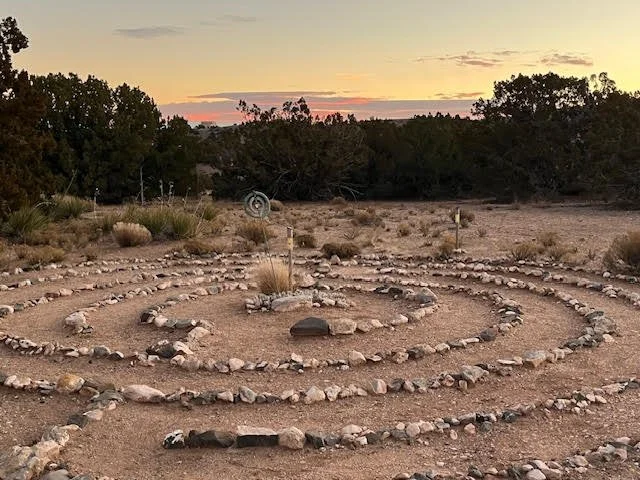
Working hour lunch break on site. Bring your own lunch if desired. Plentiful snacks and beverages provided (coffee, tea, water, bagels and fruit in morning, afternoon snacks). Ample time to explore the grounds of Jules’ Poetry Playhouse and walk the labyrinth.

Bring writing materials, free wi-fi if needed.

Instructor: Jules Nyquist. Hosted by Jules Nyquist and John Roche.

Author books will be for sale, along with Poetry Playhouse Publications books and art.

Directions and contact info sent with registration. Jules’ Poetry Playhouse is at 11 Homestead Lane, Placitas, NM.

No refunds; however, you may apply the fee to another class or merchandise if you need to cancel. If there is a waitlist and you need to cancel a 75% refund is at the discretion of Jules Poetry Playhouse.

Questions? Email jules@poetryplayhouse.com.
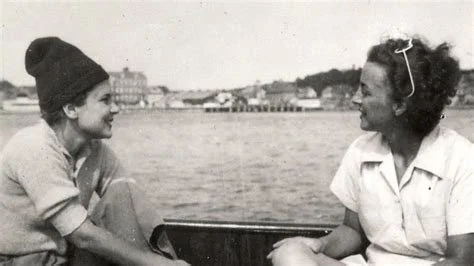
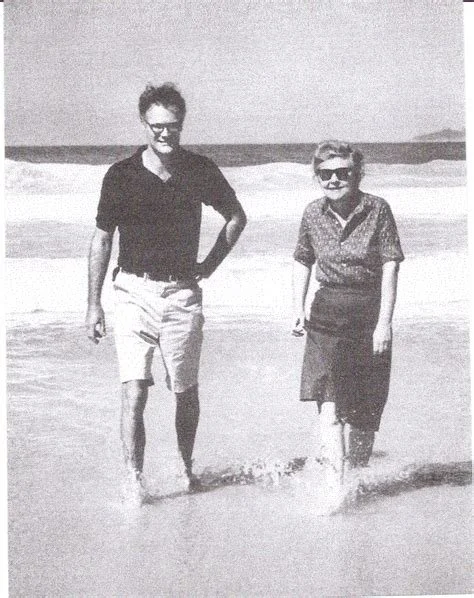
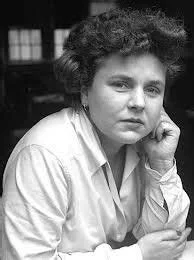
 Photos: Bishop, Bishop with Lota in Brazil, Bishop with Robert Lowell, Bishop as Poet Laureate.

One Art

By Elizabeth Bishop


The art of losing isn’t hard to master;

so many things seem filled with the intent

to be lost that their loss is no disaster.


Lose something every day. Accept the fluster

of lost door keys, the hour badly spent.

The art of losing isn’t hard to master.


Then practice losing farther, losing faster:

places, and names, and where it was you meant

to travel. None of these will bring disaster.


I lost my mother’s watch. And look! my last, or

next-to-last, of three loved houses went.

The art of losing isn’t hard to master.


I lost two cities, lovely ones. And, vaster,

some realms I owned, two rivers, a continent.

I miss them, but it wasn’t a disaster.


—Even losing you (the joking voice, a gesture

I love) I shan’t have lied. It’s evident

the art of losing’s not too hard to master

though it may look like (Write it!) like disaster.


Copyright Credit: Elizabeth Bishop, “One Art” from The Complete Poems 1926-1979. Copyright © 1979, 1983 by Alice Helen Methfessel. Used by permission of Farrar, Straus & Giroux, LLC, http://us.macmillan.com/fsg. All rights reserved.